When the owner of a Seattle-area retail property found a buyer, there was one major obstacle standing in the way of the sale: the property’s CMBS loan was in default and had been transferred to special servicing. The borrower had been told defeasance was not an option, but the special servicer’s payoff demand would have left the seller approximately $250,000 short at closing and put the sale at risk.
Our team revisited the defeasance path and ultimately executed the transaction alongside the sale. Defeasance came in approximately $400,000 below the special servicer’s original payoff demand, allowing the sale to close with approximately $150,000 in net proceeds to the seller.

Loan at a Glance
The retail property was part of a privately owned retail portfolio financed in November 2021 with a CMBS conduit loan.
- $6.8M original loan
- $6.59M balance at defeasance
- 4.066% fixed interest rate
- ~5 years remaining
- $5.92M projected balloon
The Challenge
After the loan fell into default and was transferred to special servicing, the owner found a buyer for the property. To release the property and close the sale, the special servicer required the borrower to prepay the loan at par plus a 1% premium, in addition to nearly $889,000 in default-related charges.
The borrower had been told defeasance was not an option because the loan was in default. Under the special servicer’s payoff demand, the seller would have been approximately $250,000 short at closing. The sale could not move forward under those terms, leaving the property at risk of foreclosure.
Reopening the Defeasance Path
In a follow-up call, our team clarified that default or special servicing does not automatically eliminate defeasance. These situations are handled case by case under the loan documents and pooling and servicing agreement (PSA).
From there, we coordinated with the servicers to pursue defeasance despite the loan being in default. Once notice of intent to defease was delivered, the master servicer worked with the special servicer to return the loan for execution. At the same time, we tracked the cost of the defeasance securities portfolio against the special servicer’s payoff demand. With Treasury yields above the loan’s 4.066% rate, the securities needed to cover the remaining loan payments and $5.92M balloon could be purchased for less than the outstanding principal balance.
After defeasance was approved, we coordinated the securities purchase, successor borrower, custodian, accountant and servicer counsel. The defeasance closed alongside the property sale in September 2026.
The Results
The loan was defeased out of default and special servicing despite the borrower having previously been told defeasance was not an option.
Defeasance came in approximately $400,000 below the special servicer’s original payoff demand. Instead of facing an approximately $250,000 shortfall and potential foreclosure, the seller completed the sale with approximately $150,000 in net proceeds.
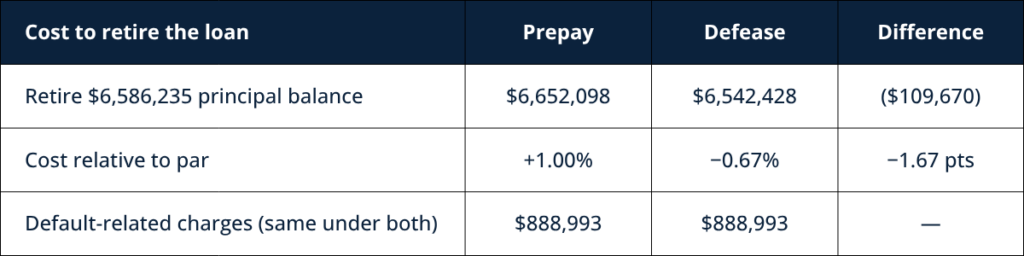
Even compared with the final payoff terms at closing, defeasance saved $109,670. That difference consisted of the $65,862 prepayment premium avoided and $43,808 from purchasing the Treasury portfolio below par.
“Thank you for saving this deal from foreclosure. The buyer was vital of course but, without the defeasance path, there would not have been sufficient funds to sell. … There is tremendous benefit to the services you provide. Absolutely saved our bacon. I had given up on defeasance. That changed only because of Luke’s first follow-up call in May to correct my misunderstanding. Thanks again for your follow-through and persistence.” – Tom S., Principal, Brookwater Advisors
What CRE Borrowers Should Take Away
Default doesn’t automatically eliminate defeasance. The ability to defease is governed by loan documents and PSA. A loan in default or special servicing may require additional steps and fees, but defeasance can still be an available exit.
Run the numbers before paying a fixed premium. When Treasury yields rise relative to the loan’s rate, the economics of defeasance can become more favorable. In this case, the securities portfolio cost less than the outstanding principal balance, making defeasance more economical than the special servicer’s prepayment terms.
Get a second opinion. The borrower had been told defeasance was not an option and had already set it aside. After our team revisited the path, the transaction went from potential foreclosure to a completed sale in roughly four months.
Facing a payoff demand from a special servicer?
Before accepting the terms, talk to our team about whether defeasance or another exit may be available.
Results depend on loan terms, servicer approval, and market conditions at closing. Past results do not guarantee future outcomes. Figures come from the closing economics dated September 10, 2026, and the special servicer’s original payoff demand.